
Paper 03 · Capital Formation
Power + Housing
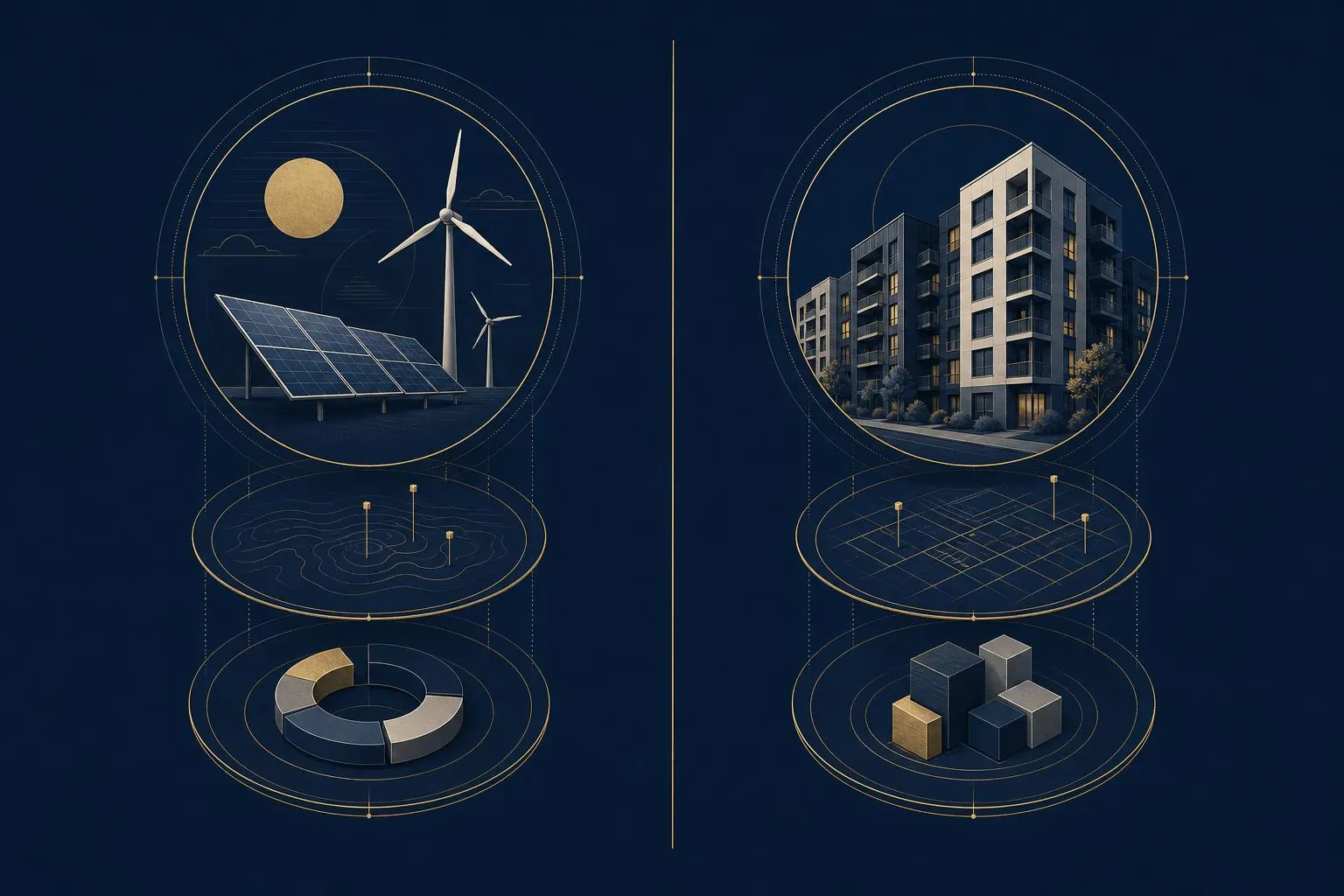
A two-engine framework for real asset capital formation
2026 · PDF · 12 pages · 15 min read
Key Observations
- 67 / 33
- Target allocation
- 2
- Ring-fenced return engines
- 6.4%
- Demand growth behind the growth engine
- −75%
- Supply contraction behind the income engine
Renewable infrastructure / U.S. multifamily
Structurally independent sleeves
India electricity consumption
U.S. multifamily starts
The Enquiry
Questions this paper examines
- 01Why pair long-duration contracted energy with income-producing housing inside a single vehicle?
- 02How are the two sleeves ring-fenced so a setback in one does not impair the other?
- 03What specifically does milestone-gated deployment control for?
- 04How should an allocator evaluate a two-engine structure against single-strategy alternatives?
- 05What governance and reporting architecture is required to make the framework auditable?
Selected Figures
Target capital allocation
The growth engine carries the majority of committed capital; the income sleeve is sized to fund distributions through the development window.
Percent of committed capital · Source: KADAK Capital Partners Funds platform framework
The two demand signals
Each engine is anchored to an independent, measurable driver — energy consumption growth and housing supply contraction.
Percent · Source: Central Electricity Authority; CBRE
Excerpt
On why two engines are not simply diversification
Diversification is usually a statement about correlation. A two-engine structure is a statement about cash flow timing. Contracted renewable infrastructure produces long-duration, escalating revenue that begins after a construction period. Stabilised multifamily produces distributable income from acquisition. The pairing is designed so that the income engine carries the vehicle through the growth engine's development window.
That only holds if the two are genuinely separable. Shared recourse, cross-collateralisation, or commingled reserves convert two engines back into one balance sheet, and the structure's central claim fails at exactly the moment it is being tested.
Ring-fencing is therefore not a documentation preference. It is the mechanism that makes the allocation logic true in adverse states, and it is the first item an allocator should verify.
Methodology
- Allocation figures describe the platform's target framework and are subject to the definitive offering documents.
- Underlying market data is sourced from the publications cited in the companion energy and housing papers.
- No performance, return, or distribution outcome is presented or implied.
Sources
- Companion KADAK research: Powering India; Housing America
- Central Electricity Authority (CEA) capacity and demand reporting
- CBRE U.S. multifamily figures
Related Insights
Continue the Series
Powering India
The structural case for renewable infrastructure in the world's fastest-growing major economy
Housing America
Supply compression and the next U.S. multifamily cycle
This research is provided for informational and educational purposes only. It does not constitute an offer to sell or a solicitation of an offer to buy any security, nor investment, legal, tax, or accounting advice. Any offering will be made only through definitive offering documents to qualified investors. Third-party data is believed reliable but has not been independently verified. Forward-looking observations are subject to change without notice, and past or projected conditions are not indicative of future results.